Last Updated: 04/02/2026

Abstract
When purchasing a garden shed or storage cabinet, consumers typically rely on exterior dimensions as the primary criterion, often assuming that "bigger is better." However, true usability depends on the internal configuration and accessible volume—including door clearance, internal peak height, roof pitch, and corner efficiency. This article analyzes the critical variables influencing practical capacity through the lens of space utilization, dimensional compatibility, and workflow paths. It proposes a "reverse-engineered" selection method based on the specific requirements of stored objects, helping homeowners avoid the common pitfall of a space that is "storable, but difficult to use."
Keywords
Garden Shed, Storage Cabinet, Storage Capacity, Usable Volume, Outdoor Storage, Shed Selection Guide
1. Introduction
In real-world scenarios, homeowners often encounter frustrating limitations that were not apparent at the time of purchase. You may find that while bicycles can be pushed into the shed, retrieving them becomes a cumbersome struggle. Similarly, a lawn mower might technically fit the floor space, but the lack of internal clearance makes maneuvering or turning it nearly impossible. For those with long-handled tools, a common oversight is insufficient vertical height, preventing shovels or rakes from being stored upright. Ultimately, many end up with a large volume of space that remains chronically inefficient.
The root cause of these issues is a common consumer oversight: a singular focus on "exterior dimensions" while neglecting "functional traffic paths." Without accounting for the space required to move, turn, and access your equipment, a shed transitions from an organized solution to a cramped container.
The root cause of these issues is a common consumer oversight: a singular focus on "exterior dimensions" while neglecting "functional traffic paths." Without accounting for the space required to move, turn, and access your equipment, a shed transitions from an organized solution to a cramped container.
2. Defining True Usable Space
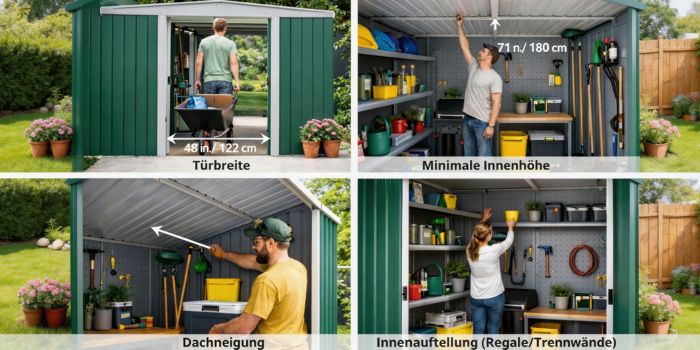
2.1 Factors Determining Functional Capacity
The functional volume of a storage structure is governed by more than just square footage. The following factors are the true deciders of capacity:
- Doorway Width: The critical clearance for equipment entry.
- Minimum Internal Clearance: The lowest point of standing room.
- Roof Pitch (Slope): Impacts overhead storage and vertical movement.
- Internal Configuration: The placement of shelving, hooks, and partitions.
- Doorway Width: The critical clearance for equipment entry.
- Minimum Internal Clearance: The lowest point of standing room.
- Roof Pitch (Slope): Impacts overhead storage and vertical movement.
- Internal Configuration: The placement of shelving, hooks, and partitions.
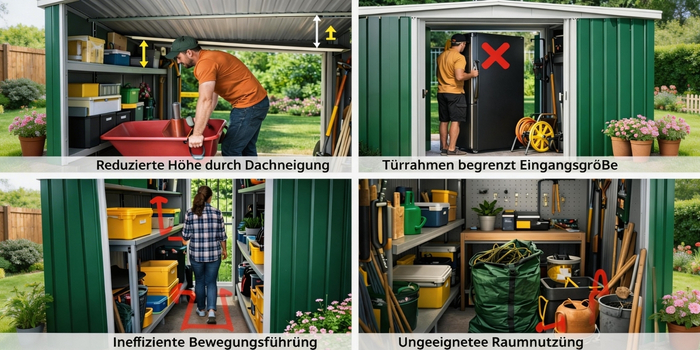
2.2 Understanding "Spatial Shrinkage"
It is common for a shed to feel smaller than its advertised dimensions. This "shrinkage" typically occurs due to:
- Height Reductions from Roof Pitch: In Gable (double-pitched) or Lean-to designs, the interior height drops significantly toward the sidewalls. It is important to remember that Peak Height ≠ Uniform Usable Height.
- Entryway Bottlenecks: The doorframe often limits the maximum dimensions of stored items. If an object cannot clear the door width, the internal volume becomes functionally irrelevant for that item.
- Inefficient Internal Layout: A poorly planned movement path makes daily operation inconvenient. Without a clear "traffic lane," the usable space effectively shrinks as items become inaccessible or buried.
- Height Reductions from Roof Pitch: In Gable (double-pitched) or Lean-to designs, the interior height drops significantly toward the sidewalls. It is important to remember that Peak Height ≠ Uniform Usable Height.
- Entryway Bottlenecks: The doorframe often limits the maximum dimensions of stored items. If an object cannot clear the door width, the internal volume becomes functionally irrelevant for that item.
- Inefficient Internal Layout: A poorly planned movement path makes daily operation inconvenient. Without a clear "traffic lane," the usable space effectively shrinks as items become inaccessible or buried.
Core Conclusion
Usable space is defined by access and geometry—not by exterior dimensions.
3. Item-Specific Spatial Requirements
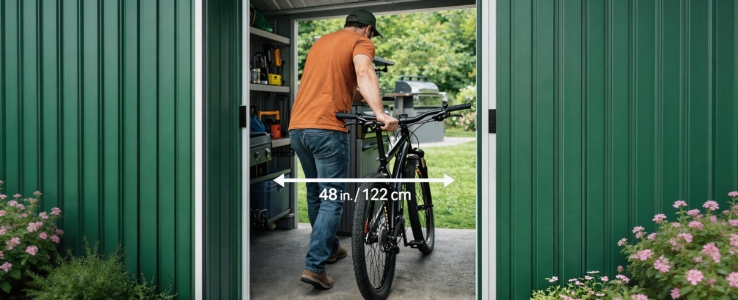
3.1 Bicycles
Key Factors: Doorway clearance ≥ Handlebar width; Unobstructed entry/exit paths.
The Bottom Line: The priority is not just "fitting" the bike inside, but ensuring it can be maneuvered in and out without colliding with other equipment.
The Bottom Line: The priority is not just "fitting" the bike inside, but ensuring it can be maneuvered in and out without colliding with other equipment.
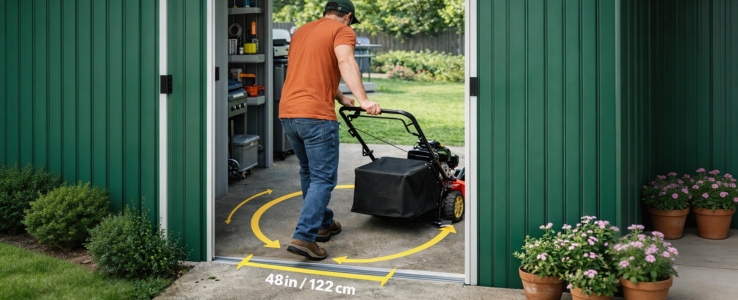
3.2 Lawnmowers & Snowblowers
Key Factors: Equipment footprint; Turning radius clearance.
Common Pitfall: Once stored, heavy machinery is often difficult to rotate.
Optimization: Design your layout for a "straight-in, straight-out" access to eliminate the need for complex maneuvering in tight quarters.
Common Pitfall: Once stored, heavy machinery is often difficult to rotate.
Optimization: Design your layout for a "straight-in, straight-out" access to eliminate the need for complex maneuvering in tight quarters.
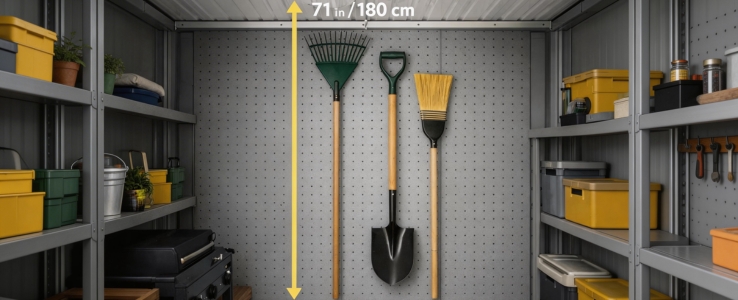
3.3 Long-Handled Tools (Rakes, Shovels, Ladders)
Key Factors: Vertical clearance; Wall-mounted accessibility.
Critical Insight: For tall items, internal peak height is far more vital than total floor area. Utilizing wall space for upright storage keeps your premium floor space clear.
Critical Insight: For tall items, internal peak height is far more vital than total floor area. Utilizing wall space for upright storage keeps your premium floor space clear.
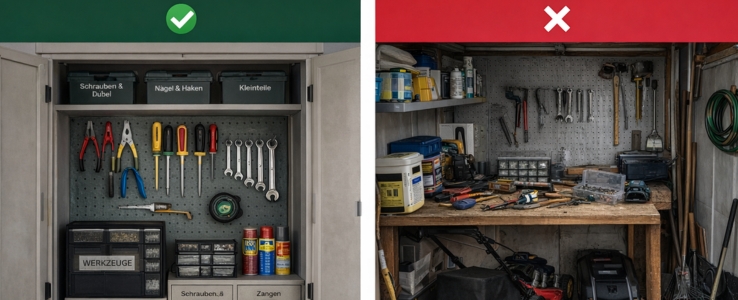
3.4 Small Hand Tools & Hardware
Key Requirements: Categorized organization; Tiered shelving systems.
The Verdict: Small hand tools are often better managed in dedicated storage cabinets rather than large sheds. Cabinets provide the shallow-depth storage needed to keep items visible and within arm’s reach, preventing them from being "lost" behind bulkier equipment.
The Verdict: Small hand tools are often better managed in dedicated storage cabinets rather than large sheds. Cabinets provide the shallow-depth storage needed to keep items visible and within arm’s reach, preventing them from being "lost" behind bulkier equipment.
Core Conclusion
Storage requirements are defined by "spatial structure," not "spatial size."
4. The "Reverse Selection" Logic
Step 1: Identify Primary Storage Objects
Item Category | Typical Examples |
|---|---|
Bulky Equipment | Lawn mowers, snowblowers, outdoor machinery |
Vertical Gear | Shovels, rakes, brooms, ladders |
Small Tools & Hardware | Hand tools, gardening accessories, hardware bins |
Step 2: Map Structural Requirements
Storage Requirement | Essential Structure |
|---|---|
Maneuverable Storage | Wide doorways + Unobstructed floor space |
Vertical Storage | Peak height + Heavy-duty wall hooks |
Organized Storage | Tiered shelving + Interior partitions |
Step 3: Determine the Product Category
Core Logic: Storage Type = Function over Size
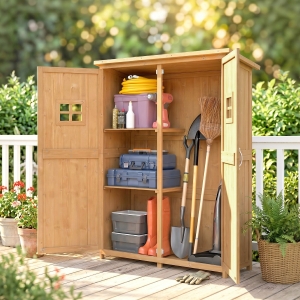
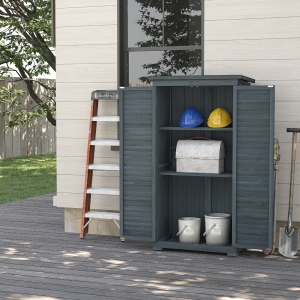
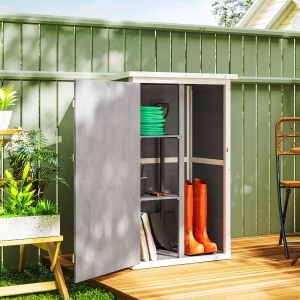
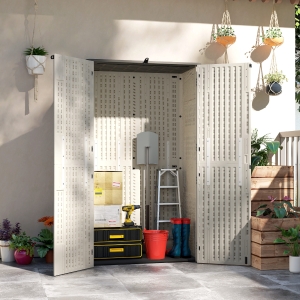
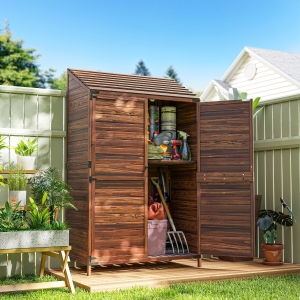
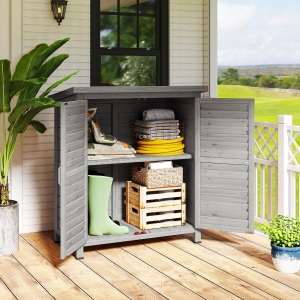
5. When a Storage Cabinet is the Superior Choice
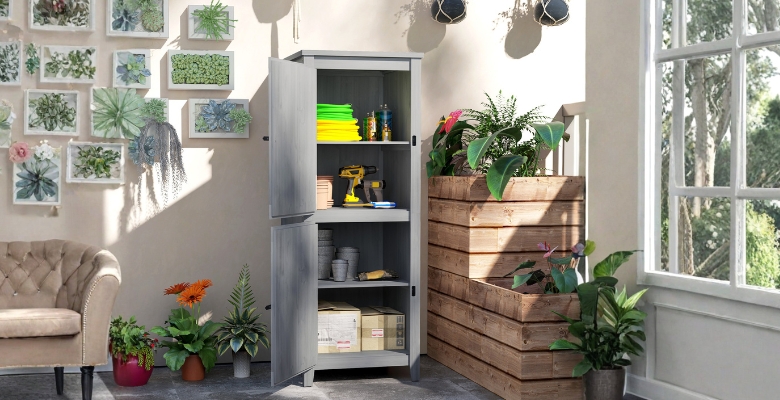

Ideal Applications:
- Precision Tools: Hand tools, power kits, and specialized gardening sprayers.
- High-Density Organization: For users who prioritize categorization and rapid retrieval.
- Space-Constrained Areas: Perfect for balconies, small patios, or tight garage corners.
Key Advantages:
- Visual Clarity: Tiered shelving ensures every item is visible at a glance.
- Ergonomic Access: Keeps frequently used items at a comfortable height, eliminating the need to reach into deep, dark corners.
- Minimal Footprint: Maximizes storage density without sacrificing valuable floor space.
The Essence:
A Cabinet is defined by "Organizational Efficiency," while a Shed is defined by "Volume Capacity."
- Precision Tools: Hand tools, power kits, and specialized gardening sprayers.
- High-Density Organization: For users who prioritize categorization and rapid retrieval.
- Space-Constrained Areas: Perfect for balconies, small patios, or tight garage corners.
Key Advantages:
- Visual Clarity: Tiered shelving ensures every item is visible at a glance.
- Ergonomic Access: Keeps frequently used items at a comfortable height, eliminating the need to reach into deep, dark corners.
- Minimal Footprint: Maximizes storage density without sacrificing valuable floor space.
The Essence:
A Cabinet is defined by "Organizational Efficiency," while a Shed is defined by "Volume Capacity."
Explore More Storage Cabinets
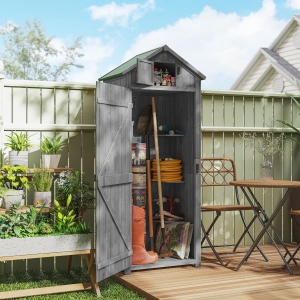


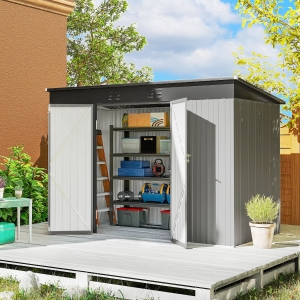
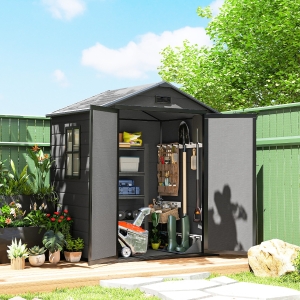
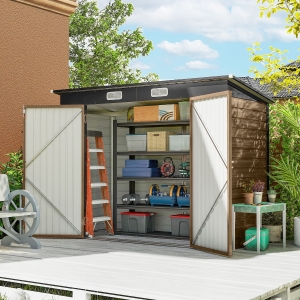
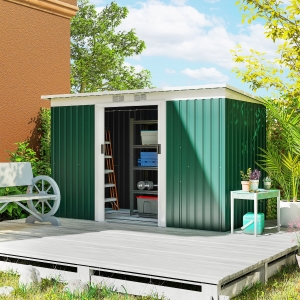
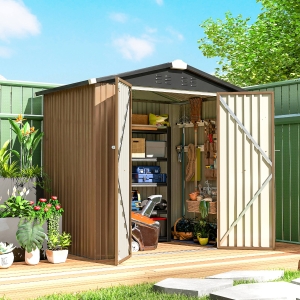
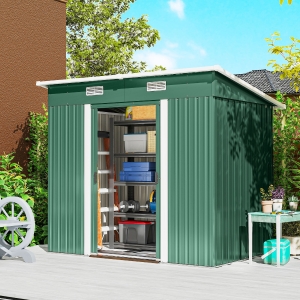
6. When a Garden Shed is Essential
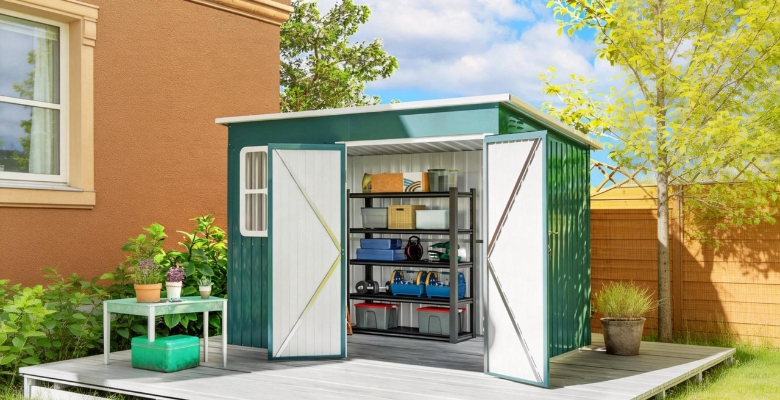
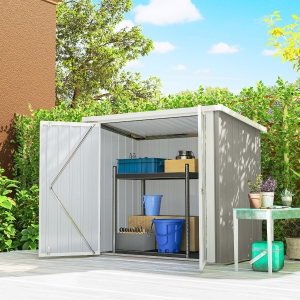
Ideal for:
- Large Equipment: Riding mowers, snowblowers, and bulky machinery.
- Mixed Storage Needs: A central hub for garden tools, patio furniture, and seasonal gear.
- Operational Access: When you need a walk-in space to maneuver or perform maintenance.
Key Advantages:
- Versatile Space: The open floor plan allows for custom layouts.
- High Capacity: Maximizes storage for oversized items.
- Scalable: Easily upgraded with shelving kits, lofts, or workbenches.
The Essence:
Shed = Volume & Versatility
- Large Equipment: Riding mowers, snowblowers, and bulky machinery.
- Mixed Storage Needs: A central hub for garden tools, patio furniture, and seasonal gear.
- Operational Access: When you need a walk-in space to maneuver or perform maintenance.
Key Advantages:
- Versatile Space: The open floor plan allows for custom layouts.
- High Capacity: Maximizes storage for oversized items.
- Scalable: Easily upgraded with shelving kits, lofts, or workbenches.
The Essence:
Shed = Volume & Versatility
Explore More Garden Sheds

7. Avoiding the "It Fits, But It Doesn't Work" Trap
7.1 Common Pitfalls
- Focusing Solely on External Dimensions: Ignoring the internal wall thickness and structural supports.
- Overlooking Doorway Clearance: A shed is useless if your widest equipment cannot pass through the entrance.
- Neglecting "Path of Motion": Forgetting that you need space to move around the items once they are inside.
- Ignoring Frequency of Use: Burying daily-use tools behind seasonal equipment.
7.2 The "Three-Question" Assessment Method
Before finalizing your choice, ask yourself:
- Entry: How easily can I get the item through the door? (Access)
- Maneuverability: How much space do I have to reposition it inside? (Motion)
- Retrieval: Can I get it out without moving three other things first? (Extraction)
7.3 Essential Planning Principles
- Allocate "Buffer Space": Always leave a dedicated clearance zone for your own body to move and reach.
- The "Front-Row" Rule: Store high-frequency items nearest to the door.
- Avoid "Stacked Storage": If you have to stack items to make them fit, the space is too small for functional use.
Core Conclusion:
Effective storage is not about "Fitting In" — it is about "Functioning Well."
- Focusing Solely on External Dimensions: Ignoring the internal wall thickness and structural supports.
- Overlooking Doorway Clearance: A shed is useless if your widest equipment cannot pass through the entrance.
- Neglecting "Path of Motion": Forgetting that you need space to move around the items once they are inside.
- Ignoring Frequency of Use: Burying daily-use tools behind seasonal equipment.
7.2 The "Three-Question" Assessment Method
Before finalizing your choice, ask yourself:
- Entry: How easily can I get the item through the door? (Access)
- Maneuverability: How much space do I have to reposition it inside? (Motion)
- Retrieval: Can I get it out without moving three other things first? (Extraction)
7.3 Essential Planning Principles
- Allocate "Buffer Space": Always leave a dedicated clearance zone for your own body to move and reach.
- The "Front-Row" Rule: Store high-frequency items nearest to the door.
- Avoid "Stacked Storage": If you have to stack items to make them fit, the space is too small for functional use.
Core Conclusion:
Effective storage is not about "Fitting In" — it is about "Functioning Well."
8. Conclusion
This article shows that:
- External dimensions do not represent usable capacity
- Door openings, clear height, and layout determine the user experience
- Different items have different space structure requirements
- Cabinets and sheds differ by function, not by size.
- External dimensions do not represent usable capacity
- Door openings, clear height, and layout determine the user experience
- Different items have different space structure requirements
- Cabinets and sheds differ by function, not by size.
References
1. National Research Council Canada. (2020). National Building Code of Canada 2020: Division B - Part 9 (Housing and Small Buildings). Ottawa: NRC Publications.
2. CSA Group. (2019).CSA S478:19 - Durability in Buildings.Toronto: Canadian Standards Association.
3. Government of Ontario. (2022).The Ontario Building Code: Section 9.5. Design of Areas and Spaces.Toronto: King’s Printer for Ontario.
4. City of Toronto. (2013).Zoning By-law 569-2013: Section 5.10.20 (Accessory Buildings and Structures).Toronto: City Clerk's Office.
5. Canadian Home Builders' Association (CHBA). (2021).Builder's Manual: Accessory Structures and Outdoor Utility Planning.Ottawa: CHBA.
2. CSA Group. (2019).CSA S478:19 - Durability in Buildings.Toronto: Canadian Standards Association.
3. Government of Ontario. (2022).The Ontario Building Code: Section 9.5. Design of Areas and Spaces.Toronto: King’s Printer for Ontario.
4. City of Toronto. (2013).Zoning By-law 569-2013: Section 5.10.20 (Accessory Buildings and Structures).Toronto: City Clerk's Office.
5. Canadian Home Builders' Association (CHBA). (2021).Builder's Manual: Accessory Structures and Outdoor Utility Planning.Ottawa: CHBA.
About the Author
Dr. Marcus Sterling is a Canadian specialist in Applied Ergonomics and Spatial Efficiency. With over 20 years of experience in urban planning across the GTA and Metro Vancouver, he focuses on optimizing outdoor storage for extreme climate loads and user operational behavior. Dr. Sterling is a leading advocate for "Functional Utility," helping homeowners transition from simple storage to high-efficiency spatial solutions.